[et_pb_heading title=”Discover the Complete History of Atomic Energy: Timeline, Pioneers, and Technological Evolution” _builder_version=”4.9.7″ _module_preset=”default” title_level=”h2″ hover_enabled=”0″ sticky_enabled=”0″][/et_pb_heading]
Atomic energy has played a pivotal role in shaping modern science and technology, influencing everything from energy production to military applications. This article delves into the comprehensive history of atomic energy, exploring its origins, key milestones, and the significant figures who contributed to its development. Readers will gain insights into the mechanisms of nuclear fission and fusion, the evolution of nuclear reactors, and the impact of atomic energy on society. As we navigate through this intricate history, we will also highlight how individuals can engage with atomic energy through DIY projects and entrepreneurial ventures. By understanding the past, we can better appreciate the present and future of atomic energy.
[et_pb_heading title=”What is Atomic Energy and How Did It Originate?” _builder_version=”4.9.7″ _module_preset=”default” title_level=”h2″ hover_enabled=”0″ sticky_enabled=”0″][/et_pb_heading]
Atomic energy refers to the energy released during nuclear reactions, particularly through the processes of fission and fusion. This energy originates from the nucleus of an atom, where the strong nuclear force binds protons and neutrons together. The release of energy occurs when these bonds are broken or formed, leading to significant energy output. The discovery of atomic energy has revolutionized various fields, providing a powerful source of energy and enabling advancements in technology and medicine.
[et_pb_heading title=”How Did Early Atomic Theory Develop?” _builder_version=”4.9.7″ _module_preset=”default” title_level=”h3″ hover_enabled=”0″ sticky_enabled=”0″][/et_pb_heading]
The development of atomic theory can be traced back to ancient philosophers like Democritus, who proposed that matter is composed of indivisible particles called atoms. In the 19th century, John Dalton further advanced this theory by introducing the idea that atoms of different elements have distinct weights and combine in fixed ratios. This foundational work laid the groundwork for modern chemistry and physics, leading to the eventual discovery of the atom’s internal structure by scientists such as J.J. Thomson and Ernest Rutherford.
[et_pb_heading title=”Who Were the Key Atomic Energy Pioneers?” _builder_version=”4.9.7″ _module_preset=”default” title_level=”h3″ hover_enabled=”0″ sticky_enabled=”0″][/et_pb_heading]
Several key figures have significantly influenced the field of atomic energy. Marie Curie, known for her pioneering research on radioactivity, was the first woman to win a Nobel Prize and remains a symbol of scientific achievement. Enrico Fermi, another notable pioneer, developed the first nuclear reactor and made substantial contributions to the understanding of nuclear fission. Their groundbreaking work has paved the way for advancements in atomic energy and its applications.
[et_pb_heading title=”How Has Nuclear Fission and Fusion Shaped Atomic Science?” _builder_version=”4.9.7″ _module_preset=”default” title_level=”h2″ hover_enabled=”0″ sticky_enabled=”0″][/et_pb_heading]
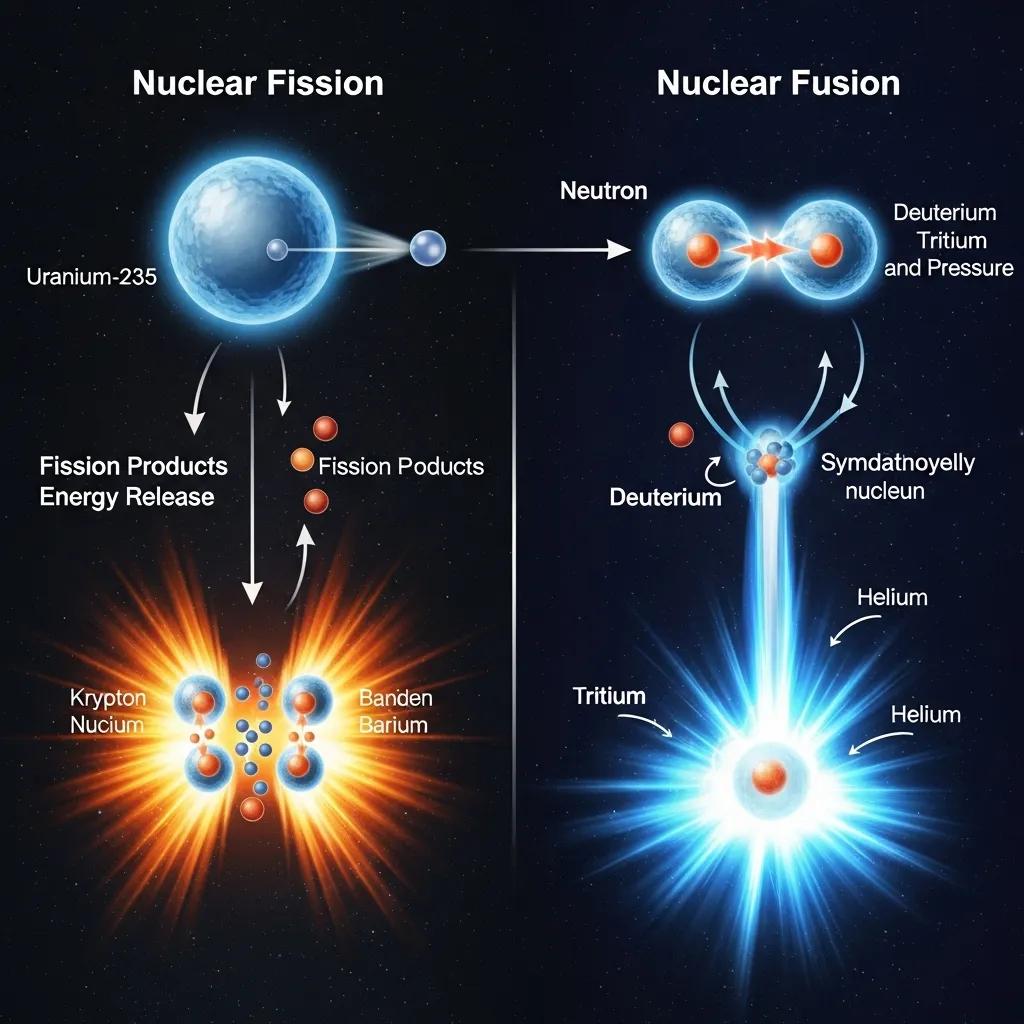
Nuclear fission and fusion are two fundamental processes that release energy from atomic nuclei. Fission involves the splitting of a heavy nucleus into smaller nuclei, releasing a large amount of energy in the process. This discovery has led to the development of nuclear power plants, which harness fission for electricity generation. Fusion, on the other hand, occurs when light nuclei combine to form a heavier nucleus, releasing energy. While fusion holds the promise of a cleaner and virtually limitless energy source, it remains a challenge to achieve sustained reactions under controlled conditions.
[et_pb_heading title=”What Is Nuclear Fission and Its Historical Development?” _builder_version=”4.9.7″ _module_preset=”default” title_level=”h3″ hover_enabled=”0″ sticky_enabled=”0″][/et_pb_heading]
Nuclear fission was first discovered in 1938 by Otto Hahn and Fritz Strassmann, who observed the splitting of uranium nuclei. This groundbreaking discovery was further explained by Lise Meitner and Otto Frisch, who provided the theoretical framework for understanding the process. The implications of fission were profound, leading to the development of atomic bombs during World War II and the establishment of nuclear power as a viable energy source in the post-war era.
[et_pb_heading title=”How Did Nuclear Fusion Evolve as an Energy Source?” _builder_version=”4.9.7″ _module_preset=”default” title_level=”h3″ hover_enabled=”0″ sticky_enabled=”0″][/et_pb_heading]
Nuclear fusion has been a subject of research since the early 20th century, with significant advancements occurring in the latter half of the century. The development of hydrogen bombs demonstrated the immense energy potential of fusion, but harnessing this energy for peaceful purposes has proven challenging. Current research focuses on achieving controlled fusion reactions, with projects like ITER aiming to create a sustainable fusion reactor that could provide a clean energy source for the future.
[et_pb_heading title=”What Are the Major Milestones in the Atomic Energy Timeline?” _builder_version=”4.9.7″ _module_preset=”default” title_level=”h2″ hover_enabled=”0″ sticky_enabled=”0″][/et_pb_heading]
The timeline of atomic energy is marked by several significant milestones that have shaped its development. From the discovery of radioactivity in the late 19th century to the establishment of the first commercial nuclear power plant in the 1950s, each event has contributed to our understanding and utilization of atomic energy.
[et_pb_heading title=”Which Events Mark the Development of Nuclear Power History?” _builder_version=”4.9.7″ _module_preset=”default” title_level=”h3″ hover_enabled=”0″ sticky_enabled=”0″][/et_pb_heading]
Key events in the history of nuclear power include the first controlled nuclear chain reaction achieved by Fermi in 1942, the bombings of Hiroshima and Nagasaki in 1945, and the Three Mile Island accident in 1979. Each of these events has had profound implications for public perception, policy, and the future of nuclear energy.
[et_pb_heading title=”How Did Atomic Energy Impact Warfare and Peace Efforts?” _builder_version=”4.9.7″ _module_preset=”default” title_level=”h3″ hover_enabled=”0″ sticky_enabled=”0″][/et_pb_heading]
The dual-use nature of atomic energy has significantly impacted both warfare and peace efforts. While the development of nuclear weapons has raised ethical and security concerns, atomic energy has also been harnessed for peaceful purposes, such as medical applications and electricity generation. The challenge remains to balance these competing interests while ensuring safety and sustainability.
[et_pb_heading title=”How Have Nuclear Reactors and Technology Evolved Over Time?” _builder_version=”4.9.7″ _module_preset=”default” title_level=”h2″ hover_enabled=”0″ sticky_enabled=”0″][/et_pb_heading]
The evolution of nuclear reactors has been driven by advancements in technology and safety protocols. Early reactors were primarily experimental, but modern designs focus on efficiency, safety, and sustainability. Understanding the different types of reactors is essential for grasping the current landscape of nuclear energy.
[et_pb_heading title=”What Are the Different Types of Nuclear Reactors?” _builder_version=”4.9.7″ _module_preset=”default” title_level=”h3″ hover_enabled=”0″ sticky_enabled=”0″][/et_pb_heading]
Nuclear reactors can be classified into several types, including pressurized water reactors (PWR), boiling water reactors (BWR), and fast breeder reactors (FBR). Each type has distinct operational principles and applications, influencing their use in various contexts. PWRs, for example, are the most common type used in commercial power plants, while FBRs are designed to generate more fuel than they consume.
[et_pb_heading title=”What Innovations Define Modern Nuclear Technology Evolution?” _builder_version=”4.9.7″ _module_preset=”default” title_level=”h3″ hover_enabled=”0″ sticky_enabled=”0″][/et_pb_heading]
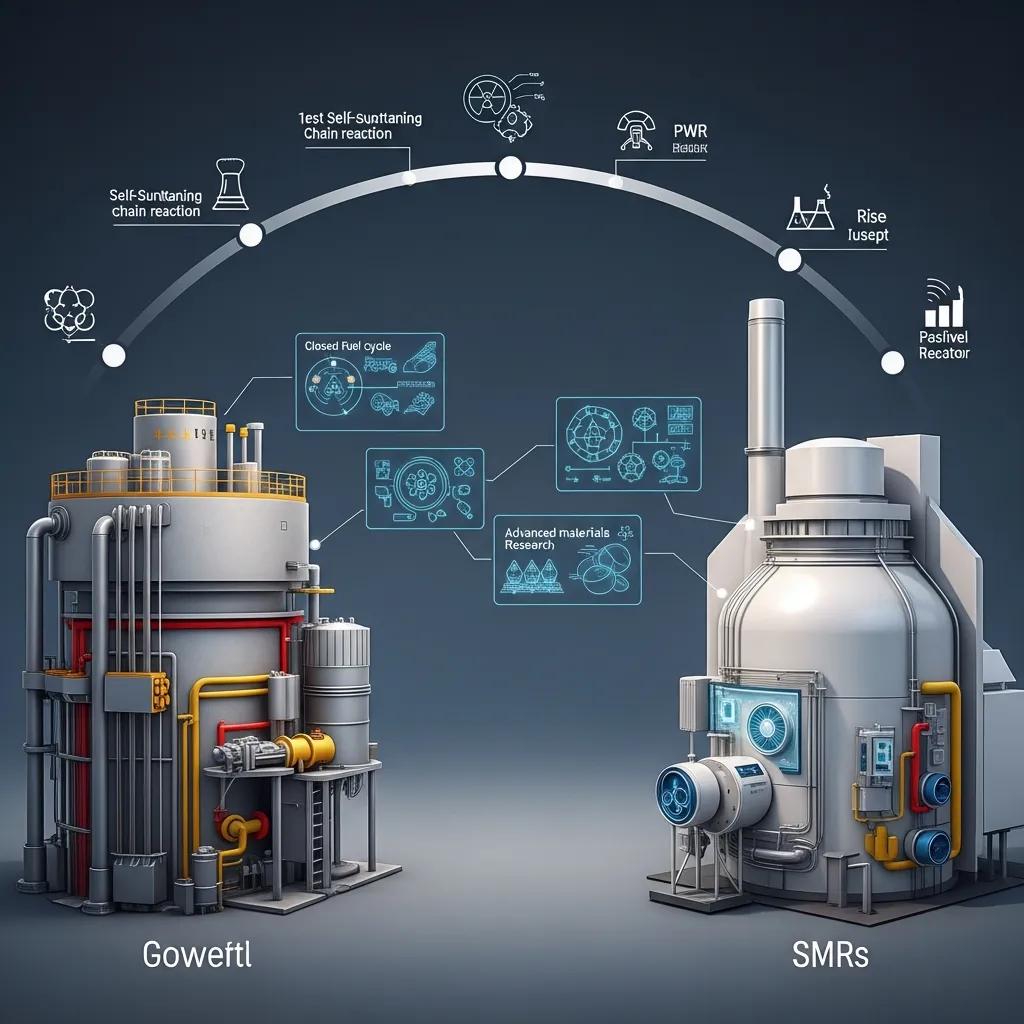
Recent innovations in nuclear technology include advancements in reactor design, safety features, and waste management solutions. The development of small modular reactors (SMRs) offers a promising approach to nuclear energy, providing flexibility and enhanced safety. Additionally, research into advanced fuel cycles aims to reduce waste and improve the sustainability of nuclear power.
Further insights into the shift towards more adaptable and safer nuclear energy solutions are highlighted in recent research:
Nuclear Reactor Evolution: SMRs & Energy Challenges
This paper explores the paradigm shift in nuclear energy generation from large, centralized nuclear power plants towards small modular reactors (SMRs), in response to the evolving economic, safety, and environmental challenges faced by the nuclear industry. For over 70 years, nuclear power has been a cornerstone of electricity generation, offering a low-carbon, reliable, and cost-effective solution. However, the traditional model of large-scale nuclear reactors has encountered significant barriers, including high financial risks, stringent safety concerns, and a lack of adaptability to smaller electrical grids, and changing energy markets.
Review of small modular reactors: challenges in safety and economy to success, 2024
[et_pb_heading title=”How Can DIY Projects and Entrepreneurial Ventures Explore Atomic Energy?” _builder_version=”4.9.7″ _module_preset=”default” title_level=”h2″ hover_enabled=”0″ sticky_enabled=”0″][/et_pb_heading]
Engaging with atomic energy through DIY projects and entrepreneurial ventures can provide valuable insights and practical experience. However, safety is paramount when exploring this complex field. Understanding the principles of atomic energy can inspire innovative projects and business opportunities.
[et_pb_heading title=”What Safety Measures Are Essential for DIY Atomic Energy Projects?” _builder_version=”4.9.7″ _module_preset=”default” title_level=”h3″ hover_enabled=”0″ sticky_enabled=”0″][/et_pb_heading]
When undertaking DIY projects related to atomic energy, it is crucial to prioritize safety. Essential safety measures include:
- Proper Training: Ensure that individuals involved have a solid understanding of nuclear principles and safety protocols.
- Protective Equipment: Use appropriate personal protective equipment (PPE) to minimize exposure to radiation.
- Regulatory Compliance: Adhere to local regulations and guidelines governing the use of radioactive materials.
These measures help mitigate risks associated with atomic energy projects, ensuring a safe and educational experience.
[et_pb_heading title=”What Entrepreneurial Opportunities Exist in Atomic Energy Today?” _builder_version=”4.9.7″ _module_preset=”default” title_level=”h3″ hover_enabled=”0″ sticky_enabled=”0″][/et_pb_heading]
The field of atomic energy presents numerous entrepreneurial opportunities, particularly in areas such as:
- Nuclear Technology Development: Innovating new reactor designs or safety systems can lead to significant advancements in the industry.
- Consulting Services: Providing expertise in regulatory compliance and safety can support organizations navigating the complexities of nuclear energy.
- Educational Resources: Developing educational materials and workshops can help demystify atomic energy for the public and inspire future generations of scientists.
These opportunities highlight the potential for individuals to contribute to the evolving landscape of atomic energy while fostering innovation and safety.